
How to Write a Dating Profile with a Disability

Practical tips for disclosure, authenticity, and connecting with the right matches

By DisabilityMatch ยท Published 5 March 2026

Writing a dating profile when you have a disability is an act of honest self-presentation in a space that often demands perfectionism. You are not hiding who you are, and you are not leading with only the hard parts either. The goal is to show up authentically so that when someone connects with you, they are connecting with the real person you are.

Start With Your Strengths, Not Your Condition

The most effective dating profiles reflect the whole person, and that means beginning with what makes you interesting, what brings you joy, and what you care about. Many disabled people worry that if they do not immediately flag their disability, they are being dishonest. They are not. Your disability is part of your life, but it is not your biography. Lead with the things that genuinely excite you. What do you do with your free time when energy or pain levels allow? What kind of person makes you laugh? What conversations could you have for hours? These are the foundations of real connection.

If you are someone who loves film, gaming, reading, cooking, or hiking (even slow walks), say so. If you are passionate about disability rights, accessibility, or community care, that is worth highlighting. If you volunteer, create art, or have professional accomplishments, include those. The point is not to hide your disability while you sell a perfect image. It is to show that your life contains interests, goals, and personality beyond any single diagnosis or condition. Someone reading your profile should be able to imagine a real conversation and real time together.
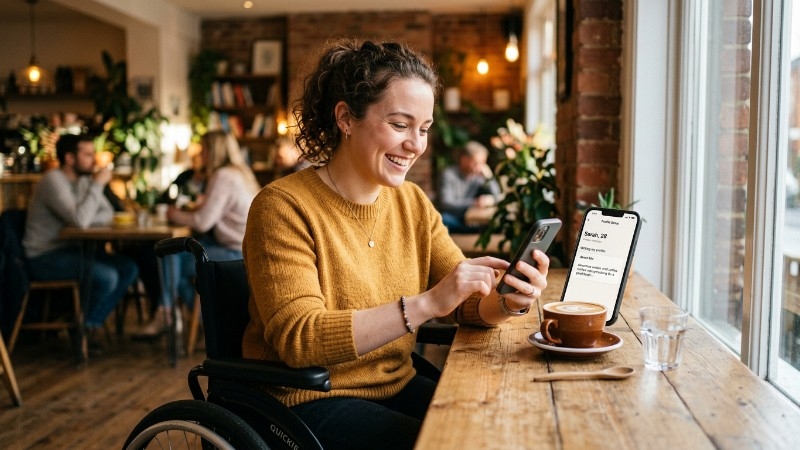
Be Clear and Straightforward About Your Disability

Once you have established who you are, be direct about your disability. This is not the place for euphemism, vague language, or hoping someone will not notice. Phrases like "I have some health challenges" or "I am differently abled" often create confusion. People cannot form realistic expectations, and you risk wasting time with someone who is uncomfortable with the reality of your condition.

Use clear, simple language. If you use a wheelchair, say so. If you are deaf, say so. If you have chronic pain, mental health conditions, or neurodivergence, use the actual words. This is not clinical; it is honest. You might write something like "I am a wheelchair user and I love exploring the city, though I will need to navigate accessibility" or "I am autistic and prefer texts over surprise phone calls, but I am great at long conversations" or "I manage chronic pain, which some days means I need to rest, and that is just how my life works." Clear, specific, and unapologetic.

The reason directness matters is that it filters. Someone uncomfortable with disability will self-select out, which saves you both time. Someone who gets it, accepts it, or is disabled themselves will see that you are being honest and direct, which builds trust immediately. Directness is attractive because it shows confidence in who you are.
Explain What You Need, Not What You Are Asking Them to Sacrifice

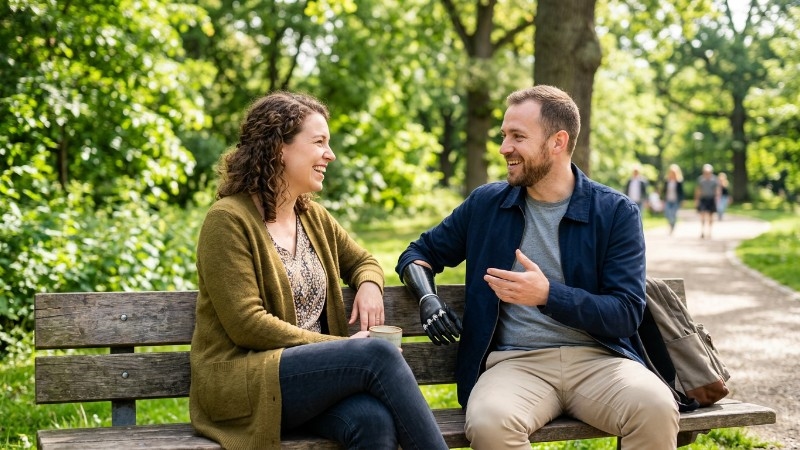
There is an important distinction here. Your disability might mean that certain activities are not accessible, or that you need accommodation or planning. That is fine. But the way you frame it matters enormously. Rather than explaining what someone cannot do with you ("I probably will not be able to go out dancing" or "I will not be able to travel easily"), frame it as what works for you. "I love cosy dates at home or accessible restaurants where we can talk for hours" or "I am a homebody and prefer building connection through conversation" or "I plan ahead because that is how I manage my energy best, which actually means really intentional dates."

The shift is subtle but significant. You are not apologizing for what your life requires. You are describing what your life actually looks like and what kinds of connection thrive within that reality. Some of your best matches will be with people who find depth over constant activity, people who prefer intimate conversation to nightlife, or people with their own reasons to appreciate planning and boundaries.

If there are genuine limitations around accessibility, transportation, or frequency of dates, mention that. But frame it factually, not apologetically. "I use a mobility aid and need wheelchair-accessible venues" is clearer and more respectful than "Sorry, but I cannot always go out." You are not asking for mercy or sacrifice. You are stating the conditions under which connection happens.

Show Your Personality in How You Talk About Disability

Your sense of humour, perspective, and self-awareness will come through in how you discuss your disability. If you tend toward self-deprecating humour and that is genuine to you, that can work. If you are matter-of-fact and practical, lean into that. If you are politically engaged with disability justice or disability culture, that is absolutely something to share. Some people write about their condition with scientific precision, others with poetic language, others with dry wit. Whatever feels true to your voice is what will resonate.

This is also where you can signal what kind of attitudes you will not accept. If you have had bad experiences with people who fetishised your disability, were overly sympathetic, or treated you as an inspiration, you might write something like "I am looking for someone who sees my disability as a fact about my life, not the most interesting thing about me" or "I am attracted to people who respect my knowledge of my own body." This is not mean or negative. It is a filter that protects you.

Talk About Disclosure Timing and Comfort

Some disabled people want to mention their disability in their main profile. Others prefer to discuss it in early messaging before a first date. Both are valid. If you are choosing not to lead with it in your profile but want to bring it up early, consider saying so directly: "I prefer to talk about disability stuff in messages before we meet" or "I will explain my access needs in more detail before we arrange our first date." This signals that you are not hiding anything, just choosing when and how to have that conversation.

If you are comfortable and want to discuss it immediately, make that clear too. Some people appreciate the direct conversation early on. Others find it safer to build rapport first. There is no right way. What matters is that you are being intentional about the process and giving potential matches a sense of what to expect.

The Authenticity Test

Before you publish your profile, read it once more. Does it sound like you? Could someone who knows you recognise your voice in it? Are you describing a life you actually want to live and share, or a version of yourself you think will be acceptable? The best profiles sound like conversation. They reveal real personality. They show someone worth knowing. If your profile feels stiff, overly positive, or like you are performing rather than communicating, revise it.

Your disability dating profile does not need to be perfect. It needs to be honest. The right person for you is someone who reads an authentic description of your life and thinks "Yes, I want to know that person." Everything else is just filtering out the wrong matches faster, which is exactly what a good profile should do.

Some people will swipe past. People always do. But the people who connect with you after reading an honest profile are connecting with the real person you are, and that is the only foundation worth building on.

FAQ: Common Questions About Disability Dating Profiles

Is it OK if I do not mention my disability in my profile?
Ultimately, this is your choice. However, most disability dating experts recommend mentioning it somewhere on your profile because it filters for compatibility early. That said, some people prefer to have the conversation in messages. If you choose not to mention it publicly, do discuss it before a first date so there are no surprises.

Should I mention what my disability is, or just that I am disabled?
Generally, being specific is more helpful. "I am disabled" can mean almost anything. "I am deaf" or "I use a wheelchair" or "I have ME/CFS" gives potential matches actual information to work with and signals your comfort with your own condition.

What if I am worried about discrimination?
That is a valid concern. Some people will discriminate. That is not a reflection of your value. It is a reflection of their limitations. A profile that filters out ableist people quickly is doing you a favour. If discrimination is a significant concern, you might choose to have the conversation in private messages first.

How do I know if someone's interest is genuine or if they are fetishising my disability?
Pay attention to their language and questions. Genuine interest sounds like curiosity about your life. Fetishisation sounds like focus on your disability as exotic or erotic. Trust your instincts. If something feels off, it probably is.

Should I talk about pain or symptoms in my profile?
Only if it directly affects dating plans (like "I manage my energy so prefer weekend dates") or if you want to filter for understanding. You do not need to describe medical details. Potential matches do not need your symptom list to decide if they like you.


Ready to write your profile? DisabilityMatch is a dating community built around honesty, accessibility, and real connection. Create your free profile today and meet someone who values the real you.
Join