
Why the First Message Feels Harder Than It Should
Nobody finds the first message easy. The blank box under a stranger's profile has defeated more promising matches than any incompatibility ever has. But when you are dating with a disability, that box can carry extra weight. Alongside the universal questions, what do I say, will they reply, am I being too keen, there is often a second layer: do I mention the disability now, will they ask about it, and what tone do I strike if they do.
The good news is that the second layer is largely optional, and the first layer is a solvable problem. Writing a good opener is a skill, not a talent, and it comes down to a handful of principles that work on any platform, from DisabilityMatch to Hinge to Match.
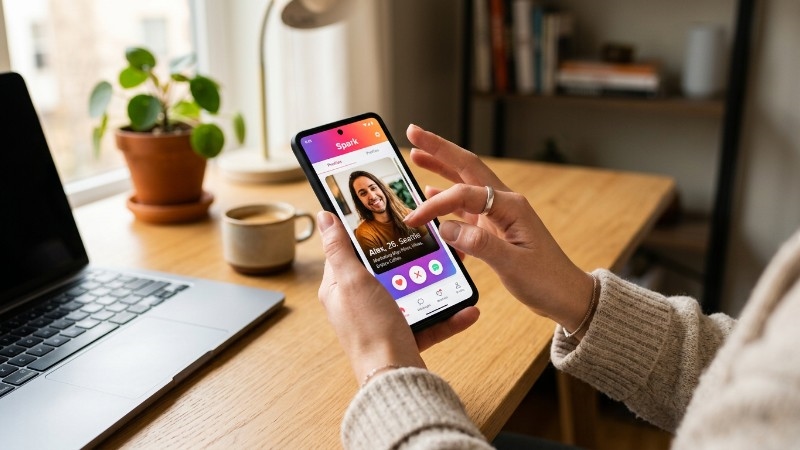
Openers That Actually Get Replies
The formula is simple: mention something specific from their profile, then end with a question that is easy to answer. That is it. The specificity proves you actually read the profile rather than firing the same line at forty people, and the easy question gives them somewhere to go with their reply.
If their photos show them at a gig, ask about the best live act they have seen. If their profile mentions cooking, ask what dish they would make to impress someone. If they say they love terrible films, name your own guilty pleasure and ask for theirs. None of these are clever. They do not need to be. They just need to be about the other person and answerable in one line.
What does not work is equally consistent: "hey", "how's your week", and anything copied from a list of supposedly killer openers that reads like it was written for someone else's profile. And a note for non-disabled members reading this: never open with a question about someone's disability or a comment on how inspiring they seem. It is the fastest way to be unmatched, and rightly so.
What to Say When the Conversation Stalls
Every chat has a wobble. The replies slow down, the energy dips, and you are left wondering whether to nudge or let it die. Before you send anything, reread the conversation. Somewhere in it there is usually an open thread: a story they never finished, a plan they mentioned, a question they asked that got buried. Picking up a thread beats a bare "hello again" every time, because it shows you were paying attention.
Add something from your own day, ask one easy question, and leave it there. If two or three attempts land in silence, stop. Silence is an answer, and no message exists that can reverse it. Your energy is better spent on the people who reply like they mean it.
Talking About Your Disability in Messages
On DisabilityMatch, this question mostly answers itself. Everyone here already knows disability is part of the picture, so your messages can be about who you are rather than what you have. That is much of the point of the platform.
On mainstream apps, the calculation is different, and it deserves proper thought rather than a rushed answer mid-chat. The short version: you owe nobody a medical history in a messaging window, a single factual line at the right moment does more than a paragraph of explanation, and the right moment is usually before you agree to meet rather than message one. The full reasoning is in our guide on when to tell someone about your disability, which covers timing and phrasing in detail.

When the Words Will Not Come: Tools That Help
Sometimes you know all of the above and the box stays blank anyway. Fatigue, brain fog, anxiety, or plain old writer's block do not care how good the advice is. For those moments there are now tools built for exactly this problem, and the one worth knowing about is SayMore, an iPhone app that finds the words when you cannot.
You paste in someone's profile, or their last message, or just drop in a screenshot, and it gives you three things you could say, in a warm, witty or direct tone, your choice. It writes openers for any dating app, so it works whether you are on Tinder, Hinge, Bumble or Match, and because it reads screenshots it works with a conversation from anywhere, including your DisabilityMatch chats. It will also give you an honest read of a conversation: who seems keener, and whether there are any flags worth noticing, which is useful when you are too close to a chat to see it clearly.
The right way to use a tool like this is as a first draft, not a script. Take the suggestion that sounds most like you, edit it until it is yours, and send that. The point is not to pretend to be a smoother version of yourself. The point is to get past the blank box and into an actual conversation, where the real you takes over anyway. The first go is free, so there is nothing lost by trying it next time a chat has you stuck.
The Words Matter Less Than You Think
Here is the secret that experienced daters eventually learn: a good-enough message sent today beats a perfect message that never gets sent. People respond to warmth, curiosity and effort far more than they respond to wit. The matches that turn into something real rarely trace back to a brilliant opener. They trace back to someone who said something honest, asked a decent question, and kept showing up in the conversation.
And the setting matters. On a platform where you are braced to explain yourself, every message costs more. On DisabilityMatch, where the understanding is built in, the same message costs less and lands better. Lower stakes make for better conversations. Better conversations are where everything starts.